Integrating Counterproductive Work Behavior and Risk Management for Strategic Organizational Governance
Abstract
Workplace misconduct generates substantial operational, financial, and reputational risks, yet behavioral vulnerabilities remain structurally under-managed in enterprise governance systems. Although counterproductive work behavior (CWB) research provides strong behavioral classifications, it does not fully integrate workplace misconduct into enterprise risk management frameworks. This article introduces the Workplace Behavior Risk Framework (WBRF), a structured model that integrates behavioral science with risk governance principles. The framework organizes workplace vulnerabilities into four measurable domains: Interpersonal Behavior Risks (IBR), Asset Misuse & Damage Risks (AMDR), Productivity Loss Behaviors (PLB), and Ethical & Integrity Risks (EIR). The article presents the conceptual model, demonstrates cross-functional application within the garments industry, and outlines implications for academic research, management education, and organizational implementation. By reframing workplace behavior as a strategic risk domain, the WBRF enables proactive governance and sustainable performance management.
1. Introduction
Organizations typically emphasize financial, operational, and compliance risks within enterprise governance structures. However, many organizational disruptions originate from behavioral breakdowns, including interpersonal hostility, asset misuse, productivity withdrawal, and ethical violations.
Despite extensive research on counterproductive work behavior (CWB), workplace misconduct is often treated as an isolated disciplinary matter rather than as a structured risk domain. This fragmented approach limits proactive prevention and weakens integration between human resources management and enterprise risk governance.
The Workplace Behavior Risk Framework (WBRF) addresses this gap by offering a structured and measurable architecture that aligns behavioral science with risk management principles.
2. Theoretical Foundation
CWB literature identifies behaviors that harm organizations or their members, typically categorized as interpersonal deviance and organizational deviance. However, these classifications do not provide a governance-oriented measurement structure.
Enterprise Risk Management (ERM) systems categorize risks into operational, financial, compliance, and strategic dimensions. Behavioral risks are often embedded within operational categories without structured classification.
The WBRF integrates these perspective, positioning workplace behavior as a measurable and governable risk domain.
3. Conceptual Model of the Workplace Behavior Risk Framework
The WBRF is illustrated in Figure 1.
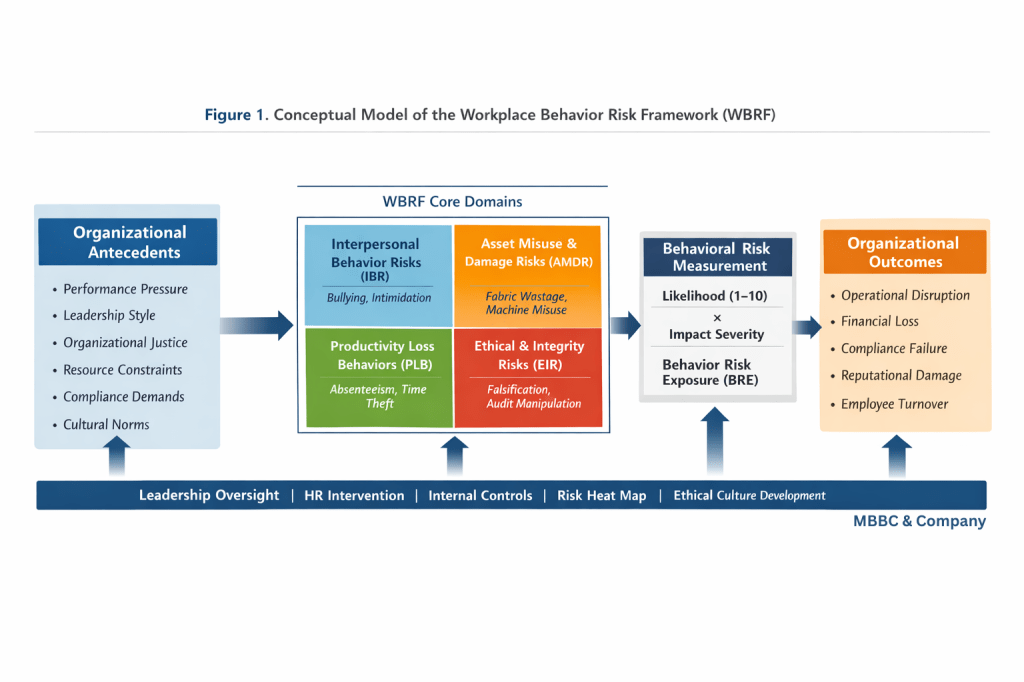
Figure 1. Conceptual Model of the Workplace Behavior Risk Framework (WBRF) © 2026 MBBC & Company
Figure Explanation
As shown in Figure 1, the conceptual model consists of five interrelated layers:
1. Organizational Antecedents
Behavioral risks are influenced by contextual drivers, including:
- Performance pressure
- Leadership style
- Organizational justice
- Resource constraints
- Compliance demands
- Cultural norms
These antecedents create conditions under which behavioral vulnerabilities emerge.
2. Core Behavioral Risk Domains (WBRF Core)
The framework organizes behavioral risks into four structured domains:
Interpersonal Behavior Risks (IBR)
Behaviors that damage psychological safety and relational trust (e.g., bullying, intimidation).
Asset Misuse & Damage Risks (AMDR)
Behaviors that compromise physical and operational resources (e.g., fabric wastage, machine misuse).
Productivity Loss Behaviors (PLB)
Behaviors that reduce efficiency and output (e.g., absenteeism, time theft).
Ethical & Integrity Risks (EIR)
Behaviors that violate governance and compliance standards (e.g., falsification audit manipulation).
These domains collectively form the behavioral risk architecture.
3. Behavioral Risk Measurement
The model operationalizes behavioral risk using a structured likelihood-impact system:
Behavior Risk Exposure (BRE) = Likelihood (1 – 10) x Impact Severity
Likelihood levels are classified as:
- 1 – 4: Moderate
- 5 – 7: High
- 8-9: Very High
- 10: Critical
This scoring system allows integration into risk heat maps and HR dashboards.
4. Organizational Outcomes
Elevated Behavioral Risk Exposure contributes to :
- Operational disruption
- Financial loss
- Compliance instability
- Reputational damage
- Employee turnover
This establishes a measurable link between behavior and strategic performance outcomes.
5. Governance and Control Mechanisms
The model incorporates a governance layer across all components, including:
- Leadership oversight
- HR intervention systems
- Internal control mechanisms
- Risk heat map monitoring
- Ethical culture development
Governance mechanisms moderate the relationship between antecedents, behavioral risks, and organizational outcomes.
4. Cross-Functional Application in the Garments Industry
The garments manufacturing industry provides a relevant application context due to its high operational intensity and compliance exposure.
Behavioral risks manifest differently across departments:
| Department | Dominant Risk Type | Strategic Exposure |
| Cutting | AMDR | Cost margin erosion |
| Sewing | PLB + IBR | Efficiency instability |
| Quality | EIR | Buyer rejection risks |
| HR | IBR + EIR | Cultural instability |
| Accounts & Finance | EIR | Financial governance risk |
| Commercial | EIR | Regulatory and export risk |
| Merchandising | IBR + EIR | Buyer relationship risk |
This mapping demonstrates that behavioral risk is systemic and cross-functional.
5. Implications for Academic Research
The WBRF contributes to scholarship by:
- Integrating CWB theory with enterprise governance
- Providing a measurable risk scoring system
- Supporting hypothesis development and empirical validation
- Enabling cross-industry comparative analysis
- Connecting behavioral risk with ESG and governance metrics
The framework offers strong potential for survey-based, Q-methodological, or structural equation modeling research.
6. Implications for Management Education and Training
The WBRF can be incorporated into:
- MBA and Executive MBA programs
- HR Analytics courses
- Organizational Behavior modules
- Risk Management training programs
For management professionals, the framework enables:
- Early indentification of behavioral risk signals
- Linking behavior to financial performance
- Structured departmental risk assessment
- Ethical leadership development
- Preventive governance systems
7. Strategic Contribution
The Workplace Behavior Risk Framework advances organizational research and practice by:
- Structuring workplace behavior into four measurable domains.
- Integrating behavioral science with risk management.
- Providing a likelihood-impact quantification mechanism.
- Supporting both academic rigor and practical implementation.
- Transforming misconduct management from reactive discipline to proactive governance.
8. Conclusion
Workplace behavior is not merely an HR concern; it is a strategic organizational risk. By embedding behavioral vulnerabilities within a structured risk architecture, the Workplace Behavior Risk Framework offers a scalable, measurable, and governance-aligned model for managing behavioral exposure. Through integration of counterproductive work behavior theory and enterprise risk management principles, the WBRF strengthens ethical integrity, operational stability, and long-term organizational sustainability.
Author:
Abdulla Al Babul, Co-Founder, MBBC & Company
Dhaka, Bangladesh


 TWA
TWA 
Leave a comment